Our Work
Ngā Ara me te Puku o te Whenua
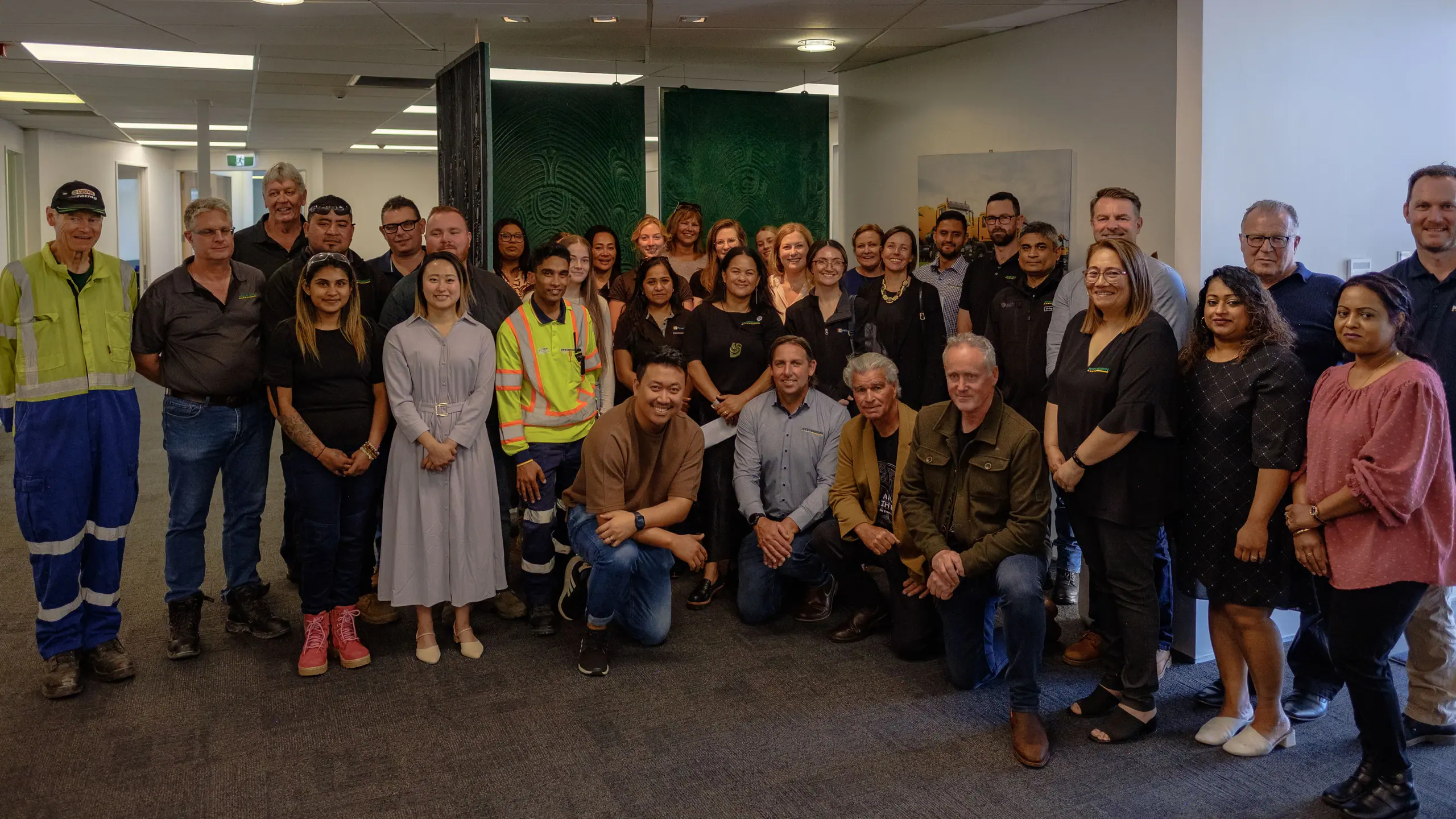
Three double-sided carved panels tracing the journey from deep earth to open road, for Stevenson Fulton Hogan’s new Tāmaki Makaurau office.
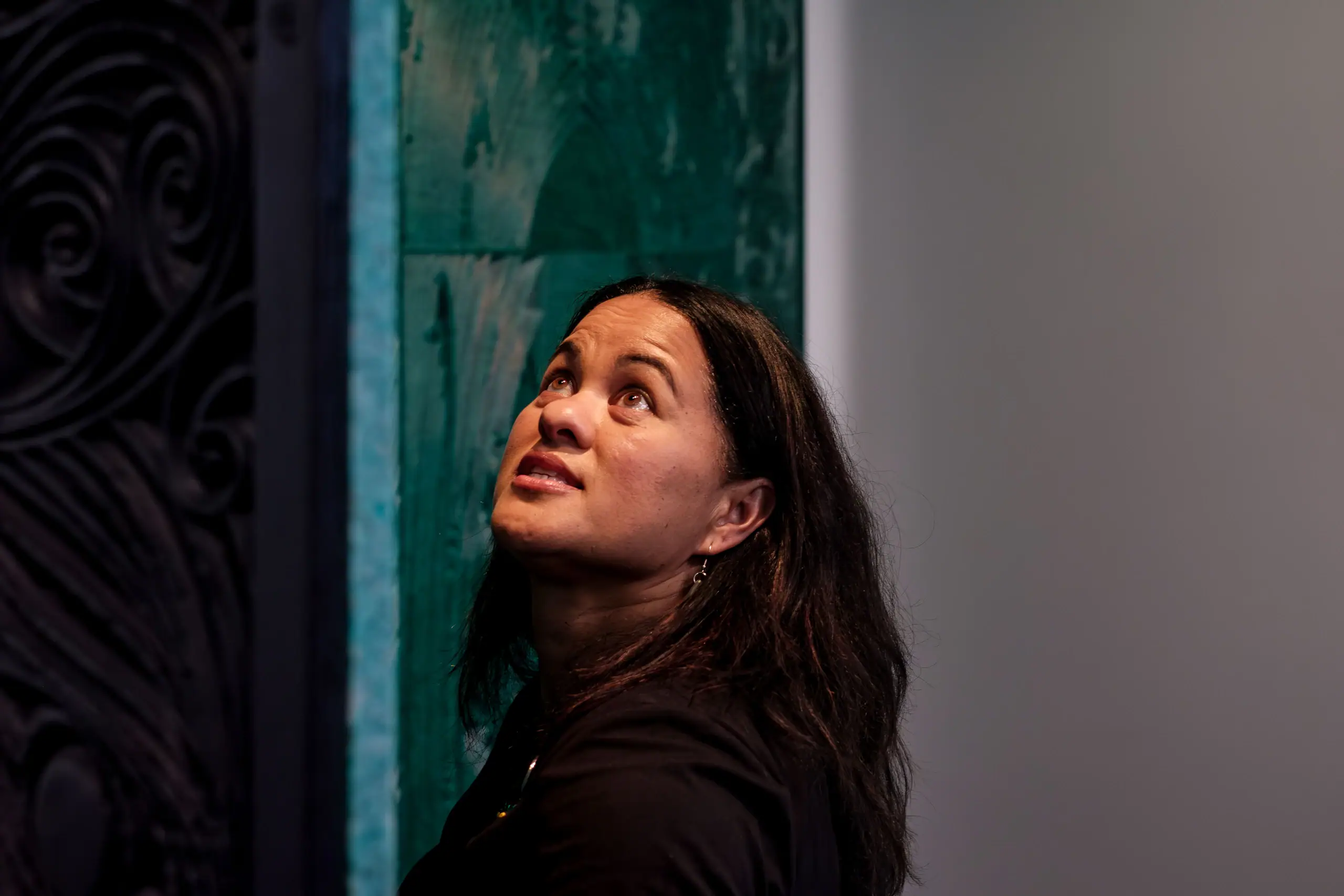
Ngā Ara me te Puku o te Whenua – working with the belly of the earth – acknowledges the relationship Stevenson Fulton Hogan holds with the whenua of Tāmaki Makaurau. Their work begins deep in the ground, where stone and soil become the foundations for the roads and infrastructure that connect communities. Installed as a sculptural waharoa, the three panels move from deep strata to open sky, carrying that story from the quarry to the pathways that radiate across the region.
The Work
The design grew out of kōrero and time on site with the Stevenson Fulton Hogan team. What we found was a company shaped by practical intelligence: resourceful people who quietly turn raw material into connection. Six tikanga stood out – care for people and whenua, humility and determination, respect for whakapapa, whanaungatanga, ingenuity, and service. A seventh was harder to name but just as clear: a sense of becoming, a company still growing into its future. Those values shaped the carving, so the work reflects who they are as well as what they do.
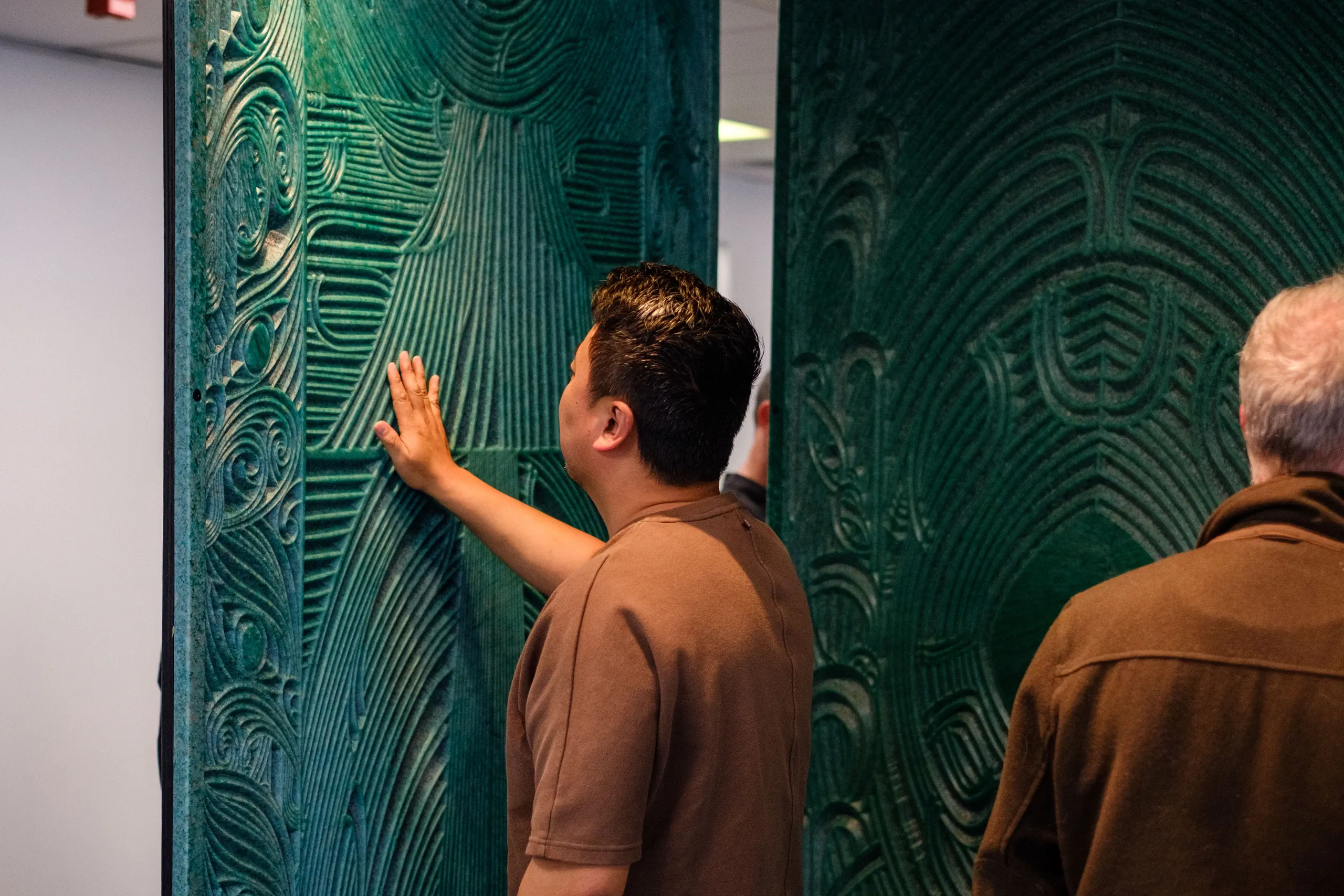
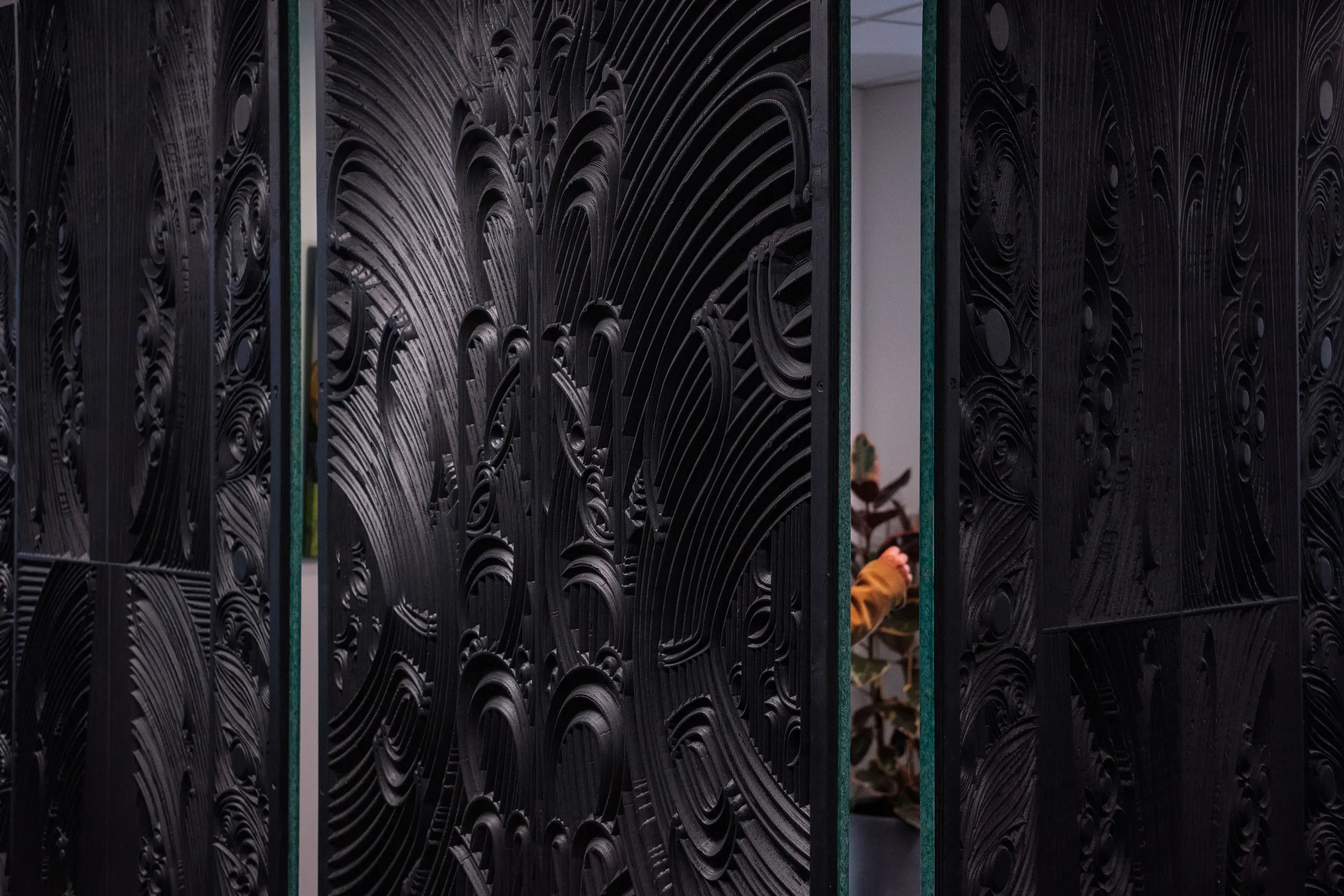
Each panel carries its own part of the story. The maunga panel holds a clear volcanic form threaded with pathways, winds and celestial movement – the ancestral mountains that anchor the region, and the roads that run out from them. The central pou rises like a waka or a genealogical spine, its symmetrical manaia figures representing uplift, lineage and the company’s founders. The puku panel is the belly of the earth itself, with breath-like radiating lines and chamber forms holding the pressure and rhythm of geology. Running through all three is the takarangi spiral, a symbol of movement, return and renewal.
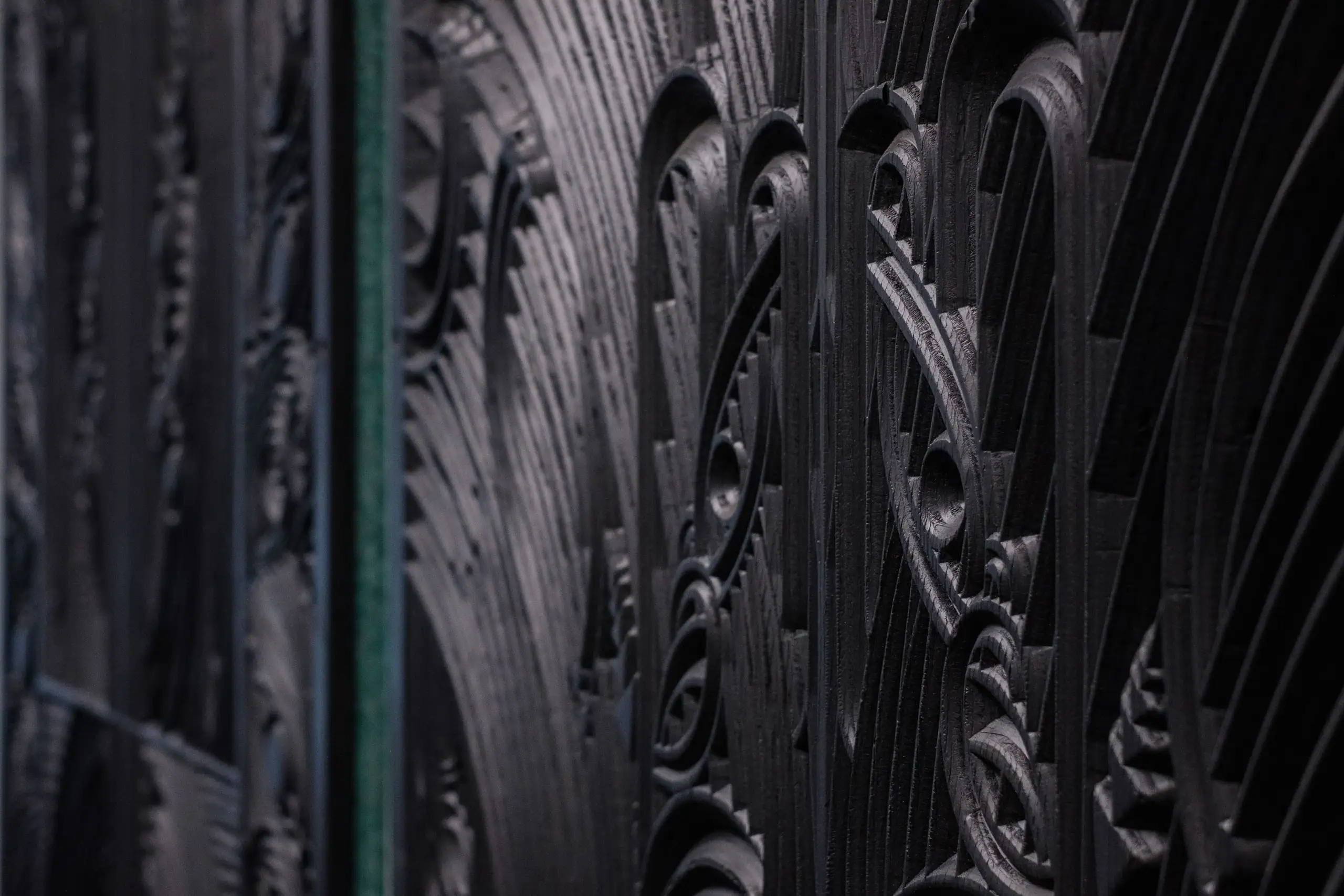
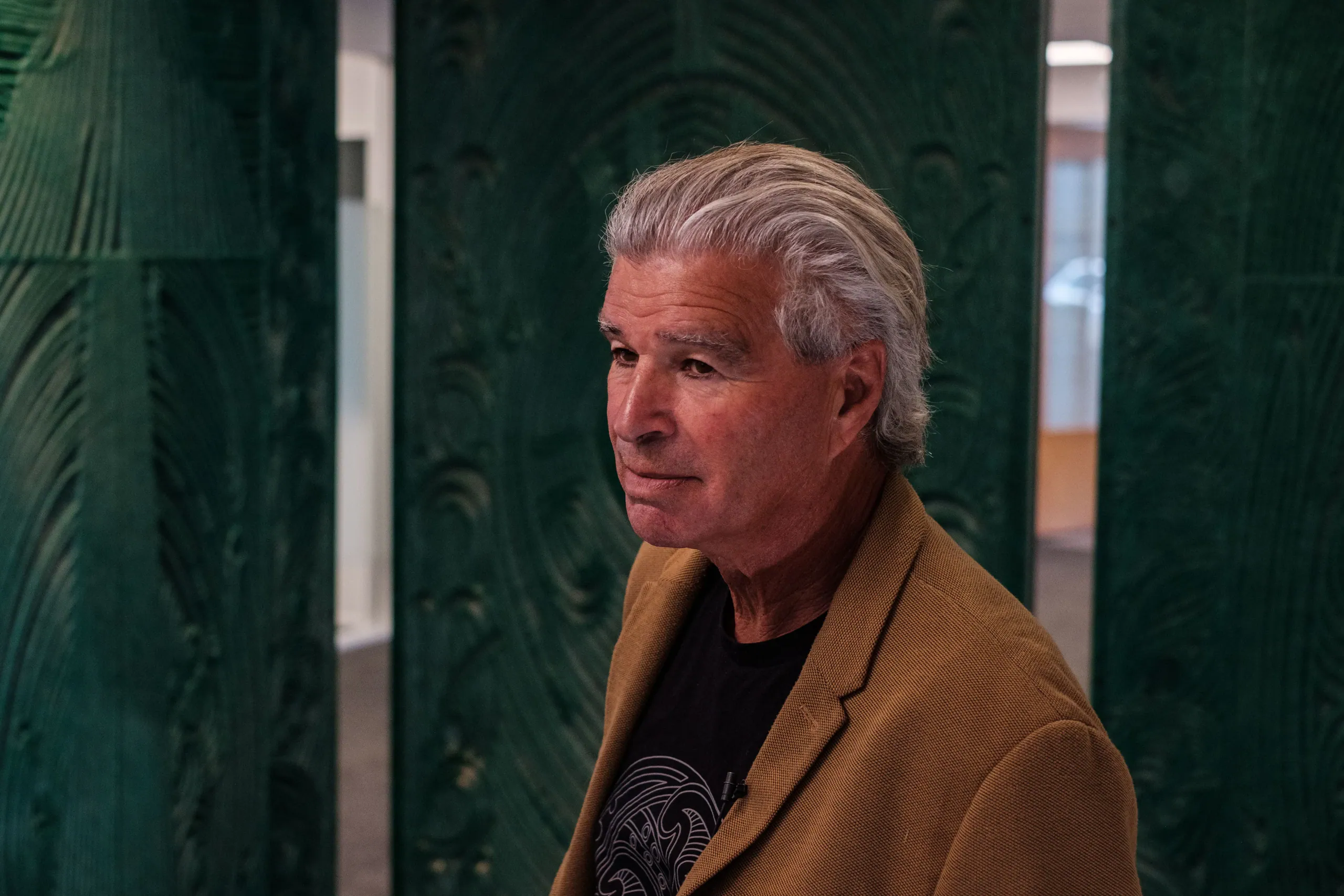
The panels are double-sided, and the two faces talk to each other. One side is Cleanstone from Critical, made from recycled fishing nets. Its deep forest green reads like pounamu, and its story is one of waste transformed into taonga. The other side is plywood charred using shou sugi ban, its blackened surface closer to basalt or obsidian. Future material on one face, ancestral stone on the other.
At Te Ara Hihiko, Jacob Scott and Jason Kendrick designed, carved and fabricated the work. Deep channels, crisp ridges and multiple levels push the carving from pattern into sculpture. This is digital whakairo: CNC as a tool of wānanga, carrying mātauranga forward while staying grounded in the foundations it comes from. The roads and structures we build every day are stories carved from the land, and this work makes that visible.
Collaborators
- Rui Peng